

Buying vs. Moving: Should You Relocate Your Mobile Home or Sell It?
July 23, 2026
Quick Answer: Deciding whether to move your mobile home or sell it comes down to a few honest questions. Can the home handle the trip, how far is the move, and how attached are you to this specific home? A newer, well-built home in good shape is usually worth relocating, especially over shorter distances. An older or rough home, or a long cross-state move, often tips toward selling it as-is and finding another home near where you're headed. There's no single right answer for everyone. The home's condition and the distance it would travel usually settle it for you.
You've got a new chapter lined up. Maybe a job in another town, family land that finally opened up, or a park you'd rather call home. The place you're standing in is a mobile home, and now you're stuck on one question. Do you bring it with you, or let it go and start fresh somewhere else?
It's a bigger call than it looks. A manufactured home isn't a couch you toss in a truck. Moving one is a real project, and selling one is its own process. Both paths can be the right choice. Which one fits depends on the home itself, how far you're headed, and what the home is worth to you beyond the four walls.
Start With One Question: Can the Home Even Make the Trip?
Before you weigh anything else, find out if the home can actually be moved. Not every one can, and that answer shapes the whole decision.
Age is the first filter
Homes built before June 15, 1976 are true "mobile homes," made before federal construction standards existed. Anything built after that date meets the HUD Code and counts as a manufactured home, built to be transported and re-set. Those older pre-code homes are the ones that often can't take a move. Their frames and materials weren't made for the stress, and many can't be brought up to current standards.
Condition matters as much as the year on the title
A home with soft, spongy floors, a sagging roofline, or a rusted-through frame is a poor candidate for the highway, no matter how much you love it. Older or fragile homes take extra care during the lift and haul, and some won't survive the trip in one piece. The honest way to know is to have an experienced crew look the structure over first. They check the frame, the roof, and the overall shape before anyone talks about a move date. Once a home passes 10 or 15 years, you may also need to show proof that the structure is sound before a mover will take it on.
The destination gets a vote too
Some parks set their own limits on how old a home can be before they'll accept it on a lot. A quick call to the receiving community can save you from planning a move to a spot that won't take the home once it arrives.
What Moving the Home Actually Involves
If the home checks out, it helps to picture the full job before you decide. A relocation isn't one truck and one afternoon.
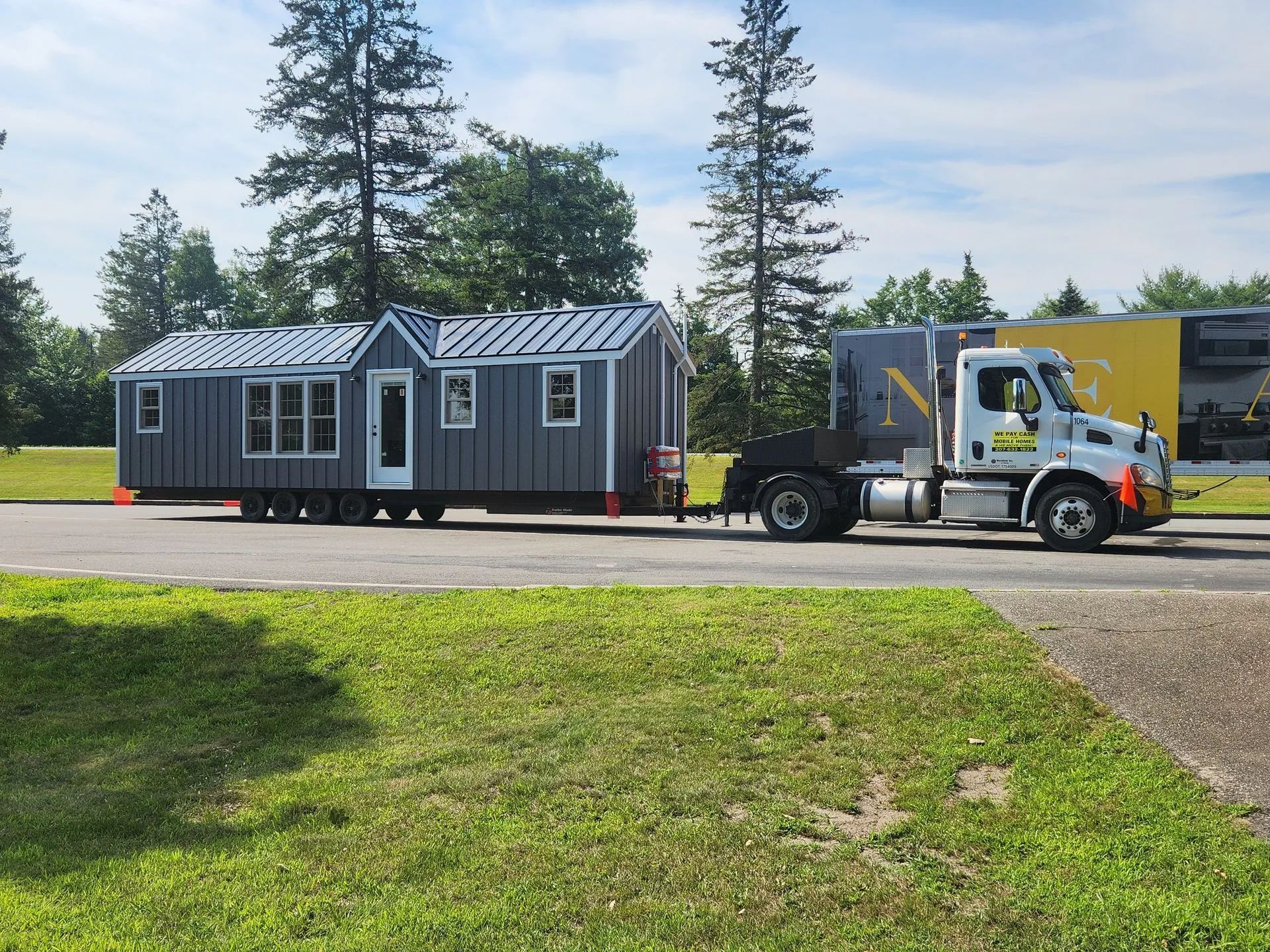
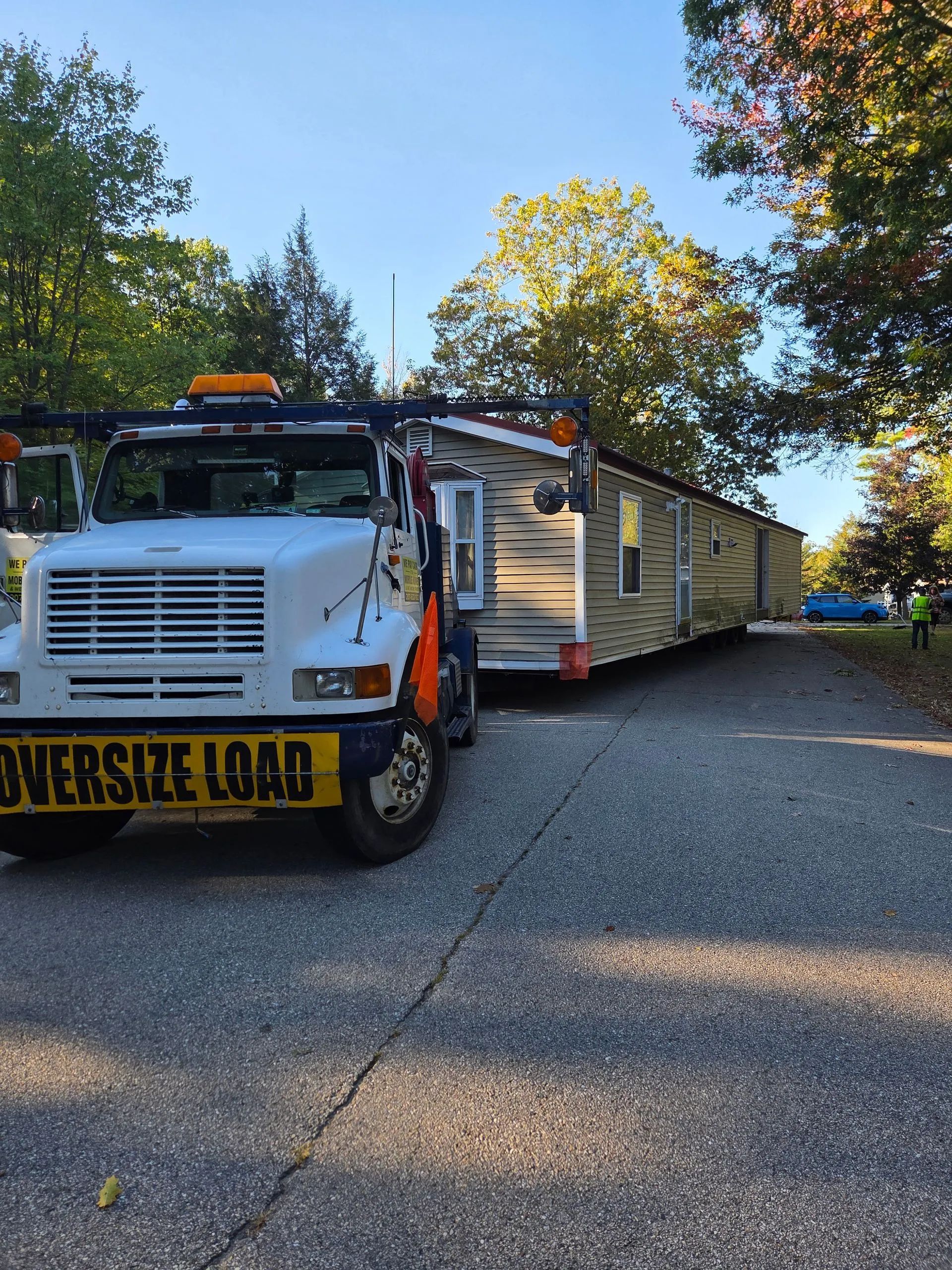
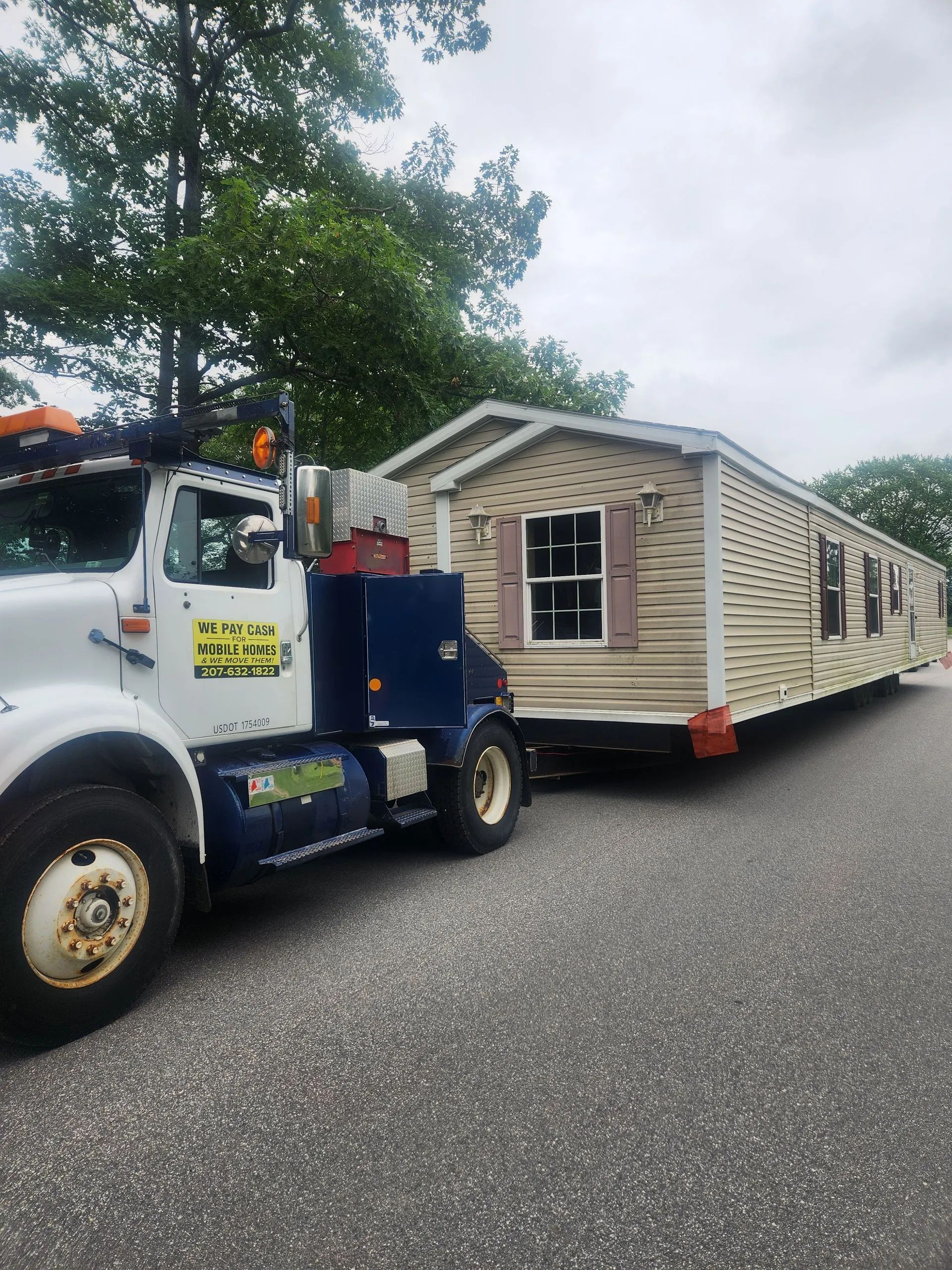
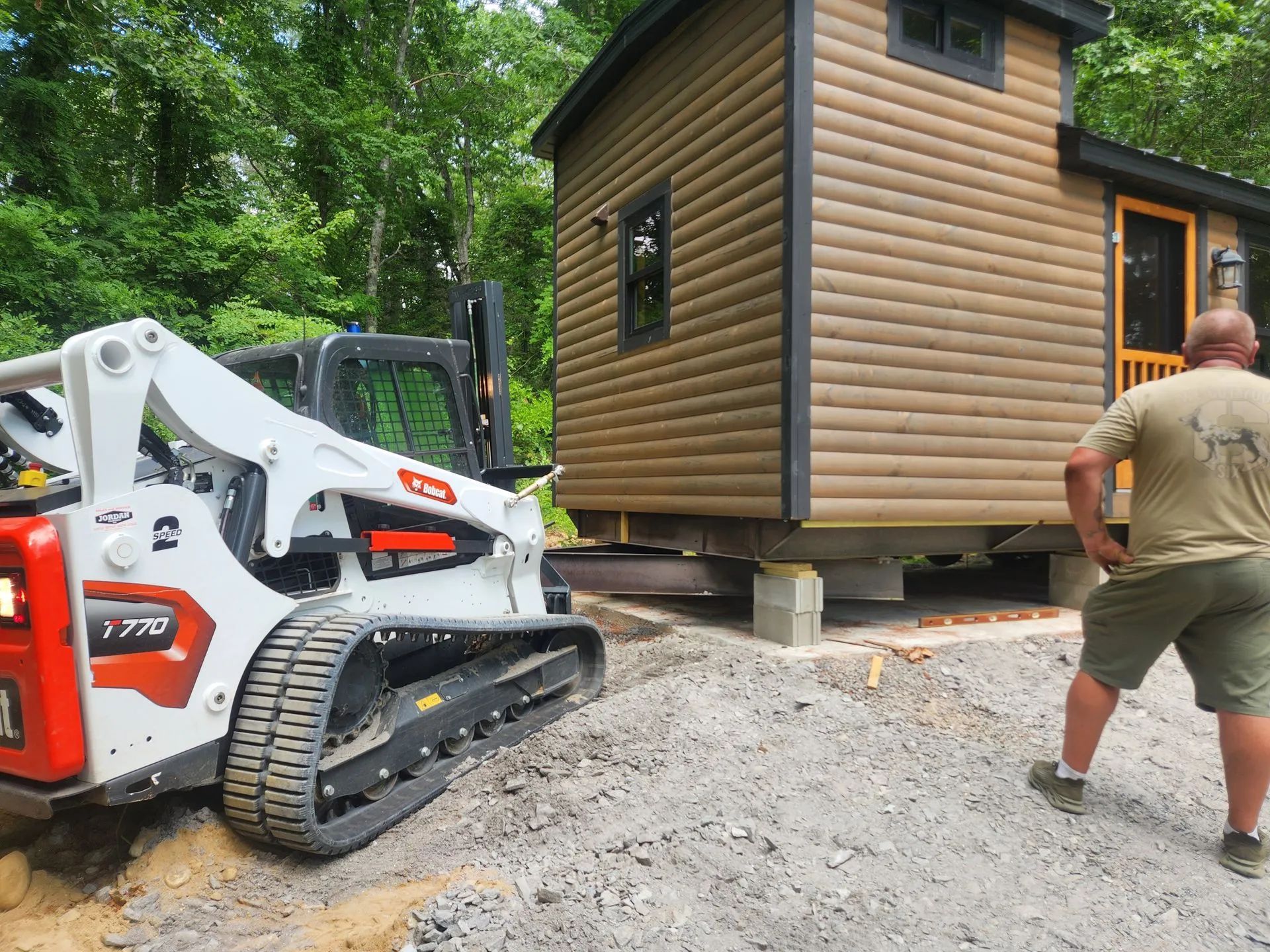
The crew disconnects the utilities, preps the interior so nothing shifts on the road, and secures the structure for transport. A single-wide rides in one piece. A double-wide comes apart into halves, travels separately, and gets rejoined at the other end. There's a route survey for clearances and road limits, then the setup work once the home lands: piers set, the home leveled, everything anchored below the frost line, and the utilities reconnected. It's a coordinated job that a specialized crew carries from the old lot to the new one. Knowing that arc is part of weighing the move honestly, because relocation keeps your same home in a new place, with a real logistics project as the tradeoff.
When Keeping and Moving It Makes Sense
Plenty of owners are better off taking the home with them. A few things push the decision that way.
The home is newer and solid
A post-1976 manufactured home that's been kept up, with a sound frame and a roof that isn't fighting you, travels well and sets up clean. If yours is in that shape, moving it keeps a known quantity in your life instead of gambling on a stranger's home.
You've put real work into it
Maybe you added a room, upgraded the kitchen, or finally got the insulation right for cold winters. Those improvements walk out the door if you sell. Relocating lets you carry them to the new lot.
You already own the land you're headed to
When the destination is your own property, moving the home you own onto land you own is often the cleanest way to land in one move rather than two transactions.
The move is close
A shorter haul is easier on the home and easier to schedule. Relocating a few towns over is a very different job than dragging a home across several states.
TIP: If your home is under roughly 20 to 25 years old, structurally sound, and the move is regional rather than cross-country, relocation is usually the stronger play. Have a mover inspect the frame and roof first so you're deciding with facts, not hope.
When Selling It Is the Smarter Move
The other direction is just as valid, and sometimes it's the obvious one. Selling makes more sense when the home or the distance works against a move.
The home is older or rough
If the structure is tired, the floors are soft, or the frame is questionable, forcing it onto the highway risks turning a shaky home into a broken one. Letting it go as-is spares you that gamble.
You're moving a long way
The farther the home travels, the more the haul stacks up: more route work, more escort arrangements along the corridor, more days on the road, and more wear on an aging structure. Past a certain distance, selling and finding a home closer to your destination is the simpler math.
You need to be gone soon
A move takes lead time for surveys, scheduling, and site prep. If your timeline is tight, a sale can move faster than a relocation.
You'd rather skip the whole ordeal
Some owners just don't want the project. A direct, as-is sale to a buyer who takes the home in its current condition means no repairs, no staging, and a closing date that bends to your schedule instead of the other way around.
The Distance Question, and What It Means Up North
Distance changes the answer more than almost anything else, and in New England it carries an extra wrinkle. A local move around the Sebago Lake area is a manageable day of work. A multi-state haul is a different animal, with more corridor to plan and more chances for weather to get a vote.
The northern climate adds its own timing pressure. Deep frost, the endless freeze-and-thaw, and spring mud season that puts weight limits on rural roads all shape when a home can safely travel and when a new pad can be graded. A short regional move works around those windows easily. A long one has to thread them across several states, which is one more reason a far-off move often tips toward selling rather than hauling. The closer your new spot, the more sense it makes to bring the home along.
WARNING: Never try to tow, level, or anchor a manufactured home yourself. These homes carry enormous weight, need engineered piers and tie-downs, and can shift or fail structurally when they're handled without the right equipment and trained operators. Transport, leveling, and anchoring belong to a licensed professional crew, every single time.
A Middle Path: Sell This One, Buy One Closer
There's a third option owners forget about. You don't have to choose between hauling your exact home or ending up with nothing. You can sell the current home where it sits and buy a used one near your new place instead.
This works well when your home is aging or the move is long. You skip the haul entirely, and you land in a home that's already been checked over. A well-run used-home sale means the structure, roof, plumbing, and wiring get inspected before you commit, and the home gets set and leveled properly on your new site. For a lot of people crossing a real distance, selling here and buying there is less strain than moving a tired home hundreds of miles.
Frequently Asked Questions
How do I know if my mobile home is too old to move?
Age alone doesn't disqualify a home, but it raises the bar. Homes built before June 15, 1976 predate federal standards and often can't be moved. For newer homes, a mover inspects the frame, roof, and structure before confirming it's sound.
Should I move my home or sell it and buy another near my destination?
Look at the home's condition, the distance, and how attached you are to it. A solid, newer home moving a short distance is usually worth relocating. An older home facing a long haul often makes more sense to sell.
Can a double-wide be moved, or only single-wides?
Both can be relocated. A double-wide is separated into its two halves, transported individually, then rejoined and re-leveled at the new site. It takes more planning than a single-wide, but experienced crews handle multi-section homes regularly.
What condition problems make a home not worth relocating?
Soft or spongy floors, a sagging or leaking roof, a rusted or bent frame, and widespread water damage are the big red flags. Those issues worsen under the stress of a move. An inspection reveals whether the structure can travel.
Does the distance of the move change the decision?
It changes it a lot. A short, regional move is easier on the home and schedule, favoring relocation. A long, multi-state move adds route planning, escorts, and wear on the structure, making selling near your destination the more practical route.
If I sell instead of moving, do I have to fix it up first?
Not with an as-is sale. A direct cash buyer evaluates the home in its current condition, so there's no need to renovate or repair before closing. That's why owners short on time often choose selling over moving.
Making the Call That Fits Your Move
The move-or-sell question rarely has a gut answer, and it shouldn't. Start with whether the home can make the trip, weigh the distance, and be honest about how much this particular home means to you. A sound, newer home moving across a couple of counties usually earns the relocation. An aging home facing a long haul usually earns a sale. Get the structure looked at, think through the distance, and the right path tends to show itself. The owners who land well are the ones who decided with clear eyes instead of wishful thinking.
Talk through your move-or-sell decision with a specialist. Get an honest read on whether your home can travel, what a relocation would involve, or whether selling as-is is the better fit. Based in Naples, Maine, Worldlink Mobile Home Movers
has spent 40
years moving, setting, leveling, and buying manufactured homes across the region, with licensed CDL operators who handle the whole job from route survey to final anchoring. Reach out to request a quote or schedule a consultation, and decide with the facts in front of you.
Share this article