

Mobile Home Permits in Maine, NH, VT & MA: What's Required?
April 7, 2026
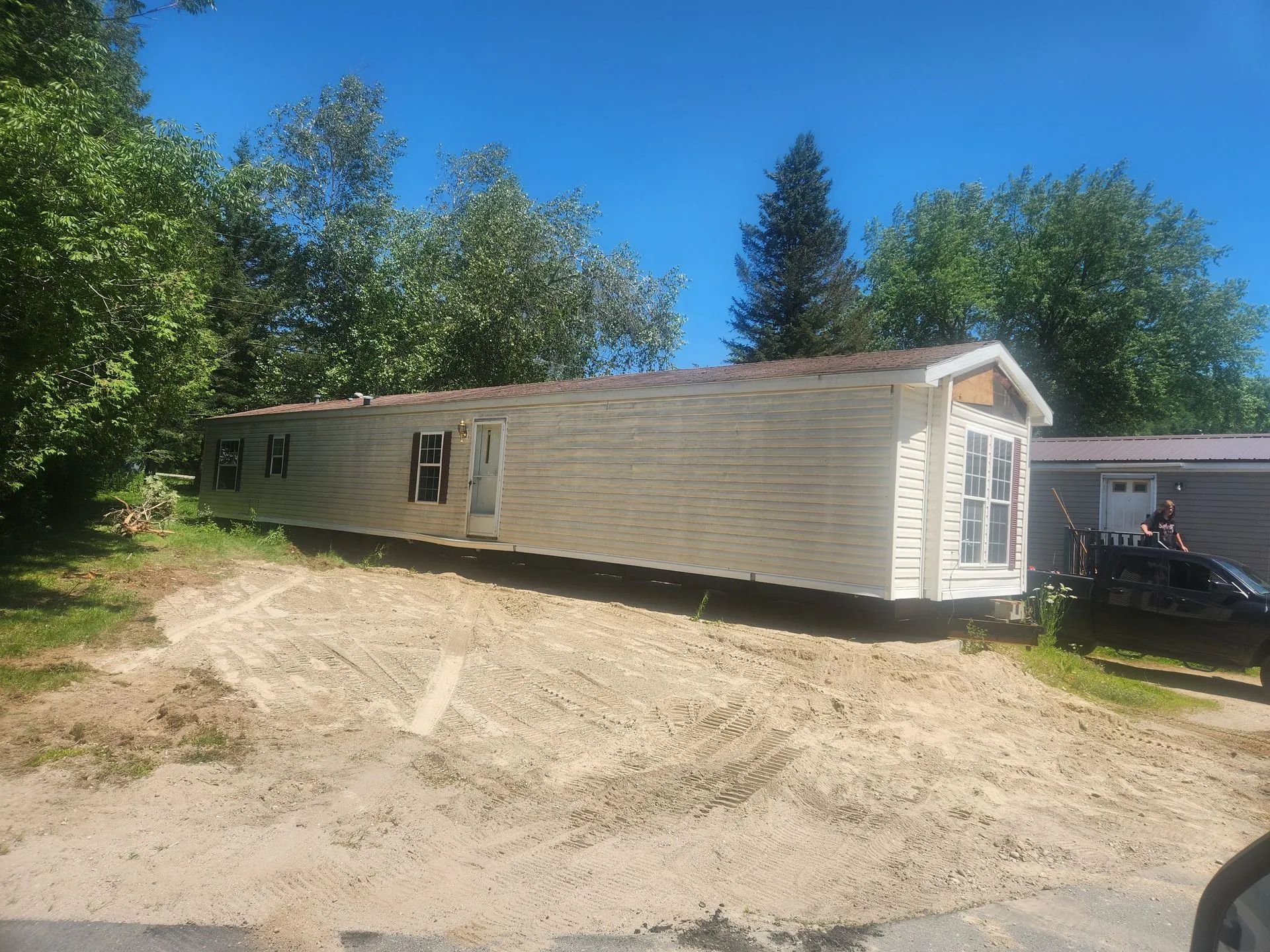
Transporting a mobile home across state lines or even within a state can be far more complex than routing a typical oversized load. Permits, inspections, route planning, and adherence to state Department of Transportation (DOT) regulations are essential to move a mobile home safely, efficiently, and legally. For mobile home owners, builders, haulers, and municipalities, understanding permit requirements is not an optional detail — it’s foundational to avoiding costly fines, delays, and logistical headaches. In the Northeastern states of Maine, New Hampshire, Vermont, and Massachusetts, each jurisdiction regulates mobile home transport in ways that reflect both regional infrastructure challenges and legislative priorities. This creates a landscape of requirements that may seem daunting, but one that can be navigated with the right knowledge and preparation.
This blog provides a detailed breakdown of the permitting process in each state, highlighting what’s required at the state DOT level, what municipal approvals may be needed, and how to approach the process practically. Whether you are relocating a manufactured home, prepping a new installation site, or coordinating with local officials, this guide is designed to give you actionable insights. Understanding these requirements not only ensures compliance but also promotes safer transport routes, better coordination with stakeholders, and a smoother project timeline. Read on for a state‑by‑state breakdown—with real‑world examples, best practices, and explanatory context.
1. Understanding Mobile Home Permits: The Foundation
What Constitutes a Mobile Home Permit?
A mobile home permit is a legal authorization to move a manufactured or modular housing unit along public roadways under specific conditions. These permits address the unique dimensions, weight, and towing requirements associated with mobile homes. Unlike standard commercial freight, mobile homes can exceed normal size limits, often requiring:
- Overweight/oversized permits
- Escort vehicle requirements
- Route approval
- Time‑of‑day travel restrictions
- Utility coordination (e.g., lowering wires)
Mobile home transport is treated differently from general freight because of safety implications for narrow roads, bridges, and local traffic patterns.
Why Permits Matter
Permits exist to protect public safety, infrastructure, and the interests of all road users. Without proper authorization:
- Law enforcement can stop the movement
- Penalties or fines may apply
- Infrastructure (like bridges) may be unintentionally damaged
- Work may be delayed due to incomplete municipal approvals
Permits also require adherence to specific safety standards, including proper towing equipment, secure unit fastening, and approved escort vehicles.
General Best Practices Before Applying
- Measure Accurately: Record width, height, length, and weights.
- Plan Routes: Identify low bridges, weight limits, and tight turns.
- Check Local Restrictions: Municipalities may have ordinances beyond state DOT rules.
- Schedule Early: Some approvals, especially for major moves, take days to weeks.
- Confirm Insurance Coverage: Ensure liability coverage aligns with state requirements..
2. Maine: State DOT & Local Permit Requirements
State of Maine Permit Overview
In Maine, mobile home transport is regulated primarily through the Maine Department of Transportation (MaineDOT). Because Maine’s rural road system includes numerous narrow rural roads and historic town centers, the state places a strong emphasis on:
- Detailed route reviews
- Clearance analysis
- Seasonal restrictions (e.g., spring thaw weight limits)
MaineDOT permits are required when a mobile home exceeds standard size thresholds — generally anything wider than 8 feet, 6 inches or heavier than typical cubic freight loads.
Application Requirements
Applicants must provide:
- Detailed unit dimensions
- Proposed route with mile markers
- Time of travel
- Towing vehicle and equipment specs
- Proof of insurance
Maine may also require utility coordination for overhead wire clearance or tree trimming prior to transport.
Municipal Considerations in Maine
Townships and municipalities can require additional approvals or have local ordinances related to oversized loads. For example:
- Towns with narrow historic main streets may require a municipal permit.
- Island or coastal roads with seasonal traffic patterns may have unique restrictions.
Failing to address municipal requirements can result in delays even if the state permit is valid.
Real‑World Example
A homeowner in Bangor seeking to relocate a double‑wide mobile home to a rural site should:
- Submit an application to MaineDOT at least 7–10 business days before the planned move.
- Confirm with the city public works office whether a local permit is also needed.
- Coordinate with utility providers in advance if the route includes overhead lines.
3. New Hampshire: Navigating DOT and Local Rules
New Hampshire DOT Specifics
New Hampshire’s Division of Motor Vehicles oversees permits for oversized mobile home transport. Because of the state’s mix of interstates and winding rural roads, NH DOT focuses heavily on:
- Safety compliance
- Escort and pilot car requirements
- Bridge and underpass clearance checks
Unlike some states that provide blanket route approvals, New Hampshire often requires individual route sign‑offs.
Permit Filing and Deadlines
Applicants must submit:
- Application forms specific to mobile home tows
- Route request for review
- Weight/height/width documentation
- Towing and escort details
Expect a minimum processing period of several days; more complex moves may require pre‑approval meetings.
Municipal and County Requirements in NH
Cities and counties can issue special jurisdiction permits, particularly where:
- Roads are not state‑maintained
- Weight restrictions exist
- There are planned road maintenance closures
For example, a move through downtown Concord might require municipal coordination with traffic control services.
Best Practices in New Hampshire
- Submit early: NH has strict review timelines.
- Consult with local authorities: Counties may have weight restrictions during certain seasons.
- Plan for pilot cars: Two escort vehicles may be required on state and secondary roads.
Case in Point
Transporting a 14‑foot wide mobile home from Portsmouth to a remote Lakes Region property could require:
- State DOT route approval
- A municipal permit in both origin and destination cities
- Coordination with local police for temporary traffic control
4. Vermont: State Permits and Municipal Oversight
Vermont Agency of Transportation (VTrans) Guidelines
Vermont’s rural terrain and aging infrastructure make mobile home transport particularly challenging. The Vermont Agency of Transportation (VTrans) requires permits for all oversized or overweight loads, with specific attention to:
- Seasonal weight restrictions (spring thaw)
- Designation of approved routes
- Height and width clearances on historic bridges
Vermont uses a comprehensive review process, where routes are evaluated for:
- Structural integrity of bridges
- Roadway width limitations
- Seasonal weight banning periods
Permit Application Essentials
Required components usually include:
- Unit dimension details
- Exact dates and times of planned movement
- Proposed travel route and alternatives
- Proof of insurance and compliance verification
In certain cases, applicants may need to attend a VTrans review session if the load is unusually large.
Municipal and Local Road Considerations
Vermont towns often control roads that are essential to planned routes. These local jurisdictions may require:
- Separate road use permits
- Fees for wear and tear
- Local public works cooperation
Vermont’s winter and spring seasons also trigger additional rules — for example, some towns limit oversized load travel during the annual spring thaw to protect vulnerable roadbeds.
Challenges and Solutions in Vermont
Challenge: Narrow, winding roads in mountainous towns.
Solution: Advance route planning with VTrans engineers and local road commissions helps identify safe passage ways and reduces disruption.
Example Scenario
Moving a 16‑foot wide manufactured home from Burlington to Stowe during early March would require:
- A VTrans oversized permit
- Confirmation of seasonal restrictions on secondary roads
- Municipal agreements with intermediate towns for road access
5. Massachusetts: MassDOT & Municipal Permit Landscape
Massachusetts Department of Transportation (MassDOT) Standards
Massachusetts has some of the most structured permitting requirements for oversized loads, including mobile homes. MassDOT categorizes these movements under special permit classes due to the density of road networks, complex urban centers, and heavy traffic flow.
MassDOT requires:
- Detailed route plans including state and local roads
- Police or MassDOT escorts on designated highways
- Comprehension of low bridges and restricted zones
Permit Submission and Review
MassDOT permits require the submission of:
- An oversized load application
- Proof of insurance with state‑mandated liability thresholds
- Travel timing windows (often restricted to off‑peak hours)
Massachusetts may also require traffic plan submissions for moves in urban or congested areas.
Local Municipal Requirements
Cities and towns in Massachusetts enforce additional rules, especially in:
- Historic districts
- Downtown centers
- Areas with weight limitations
Local public works departments may request additional fees or conditions, such as:
- Temporary parking restrictions
- Street closure permits
- Utility coordination
Best Practices in Massachusetts
- Start with a pre‑application consultation with MassDOT.
- Coordinate with every jurisdiction along the route — including town and city engineering departments.
- Plan travel during off‑peak travel windows to reduce traffic impacts.
Real‑World Example
Transporting a modular home through Worcester into a rural installation site may require:
- MassDOT route approval
- City of Worcester traffic permits for arterial roads
- Negotiation of timing windows to avoid commute hours
Proven Professionals Simplifying Complex Mobile Home Permits
Understanding mobile home permit requirements in Maine, New Hampshire, Vermont, and Massachusetts is essential for safe, legal, and efficient transport. Each state has unique permit standards driven by geographic, infrastructural, and legislative factors. From route approval and seasonal weight restrictions to municipal permits and utility coordination, the process requires careful planning and clear communication with multiple authorities. Advance preparation — combined with comprehensive documentation and proactive coordination — not only supports regulatory compliance but also reduces delays, minimizes risk, and fosters smoother operations for mobile home relocations.
At Worldlink Mobile Home Movers
in Naples, Maine, with over 40
years of experience, we specialize in navigating these complex permitting landscapes for homeowners and professionals. With deep regional expertise and a track record of successful transports across New England, we understand the nuances of state DOT rules and municipal requirements. Our focus is on delivering dependable, compliant, and seamless mobile home moves, guided by professionalism and a commitment to exceptional service. When it comes to permits and planning, our experience becomes your advantage — ensuring your project moves forward confidently and efficiently.
Share this article